Fixed Asset Management helps teams track assets from purchase through depreciation and retirement. Instead of maintaining separate spreadsheets, the module keeps asset records, methods, useful lives, and depreciation schedules inside the accounting system. That makes periodic accounting easier and gives finance a clearer view of the asset base. It also supports better documentation for review and audit work. For growing businesses, this removes a common source of manual work and inconsistency.
Reduces manual tracking, improves depreciation accuracy, and supports compliance.
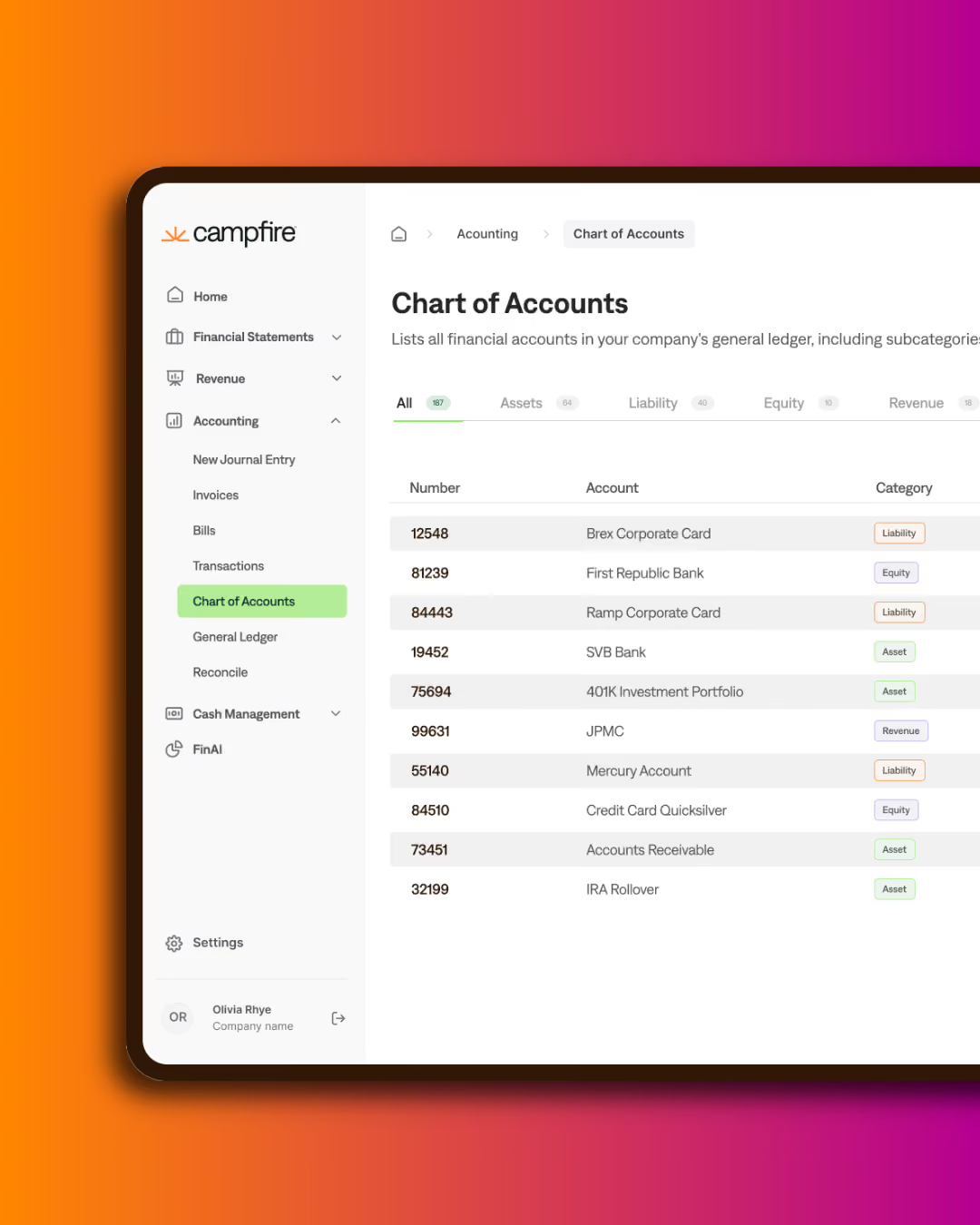
Campfire's Fixed Asset Management module provides a comprehensive, automated platform for tracking and managing every asset in your organisation from acquisition through to disposal or retirement. The platform maintains a centralised asset register that captures detailed information about each asset including purchase date, cost, location, department assignment, warranty details, and maintenance history, giving your finance team complete visibility into your organisation's asset portfolio.
Campfire supports multiple depreciation methods including straight line, diminishing value, units of production, and sum of years digits, automatically calculating depreciation charges based on the method and useful life assigned to each asset class. For Australian businesses, the platform handles the specific requirements of Australian tax depreciation rules including the instant asset write off provisions, the simplified depreciation rules for small businesses, and the distinction between Division 40 and Division 43 assets. Cynder configures the asset categories, depreciation policies, and accounting rules during implementation to ensure compliance with both AASB standards and ATO requirements from day one.

The asset acquisition process in many organisations involves multiple departments and approval workflows, yet the finance team often only becomes aware of new assets when invoices arrive for payment, creating gaps in the asset register and delays in commencing depreciation. Campfire's asset acquisition and registration capability streamlines the entire process from purchase requisition through to asset capitalisation, ensuring that every qualifying asset is captured in the register promptly and accurately. The platform integrates with your procurement and accounts payable workflows to automatically identify purchases that meet your capitalisation thresholds, flagging them for asset registration and routing them through the appropriate approval process.
When an asset is registered, Campfire captures comprehensive details including the asset description, serial number, purchase cost, installation costs, any directly attributable costs that should be capitalised, the physical location, the responsible department or cost centre, and the assigned asset category which determines the depreciation method and useful life. The platform supports bulk asset registration for large acquisitions such as office fit outs or technology refresh programs, allowing your team to register hundreds of assets simultaneously using import templates. Campfire also handles complex capitalisation scenarios including assets constructed or developed over time, where costs are accumulated in a work in progress account and capitalised upon completion. For organisations with approval workflows, the platform supports configurable approval hierarchies based on asset value, category, or department, ensuring that capitalisation decisions are properly authorised before assets enter the register. Cynder configures the capitalisation thresholds, asset categories, and approval workflows to match your organisation's policies and accounting standards.
Calculating depreciation accurately across hundreds or thousands of assets is one of the most error prone and time consuming activities in the period end close process, particularly for organisations that need to maintain both accounting and tax depreciation schedules simultaneously. Campfire's automated depreciation engine eliminates this burden by calculating and posting depreciation charges automatically based on the depreciation method, useful life, and residual value assigned to each asset or asset class. The platform supports all commonly used depreciation methods and allows different methods to be applied to the same asset for different purposes, maintaining parallel depreciation books for accounting reporting under AASB standards and tax reporting under ATO rules. Campfire automatically handles complex depreciation scenarios including mid period acquisitions with configurable conventions for the first period of depreciation, changes in useful life estimates that require prospective adjustment, asset impairments that reduce the carrying value and alter future depreciation charges, and revaluations under the revaluation model permitted by AASB 116.
The platform generates comprehensive depreciation schedules that show the opening value, current period charge, accumulated depreciation, and closing written down value for every asset, providing the detailed supporting documentation needed for audit purposes. For organisations managing intangible assets such as software licences, patents, and capitalised development costs, Campfire handles amortisation using the same automated engine with appropriate methods and useful lives. The platform also supports the automatic review of residual values and useful lives at each reporting date as required by AASB 116, flagging assets where actual usage patterns suggest that the current estimates may need revision. Cynder configures the depreciation methods, useful life tables, and posting schedules to align with your accounting policies and regulatory requirements.
Throughout an asset's lifecycle, there comes a point where it must be disposed of through sale, scrapping, trade in, or retirement, and processing these disposals correctly is essential for maintaining accurate financial records and meeting compliance requirements. Campfire's asset disposal and retirement capability manages the complete disposal process from initiation through to final accounting entries, ensuring that every disposal is properly authorised, valued, and recorded. The platform supports multiple disposal scenarios including outright sale at market value, trade in against new asset purchases, scrapping of fully depreciated assets, insurance claims for damaged or stolen assets, and transfers between entities within a corporate group. When a disposal is initiated, Campfire automatically calculates the gain or loss on disposal by comparing the sale proceeds against the asset's carrying value at the date of disposal, running depreciation up to the exact disposal date to ensure accuracy. The platform generates all necessary accounting entries including the removal of the asset cost and accumulated depreciation from the balance sheet, recognition of any disposal proceeds, and posting of the gain or loss to the appropriate income statement account. For Australian businesses, Campfire calculates the GST implications of asset disposals and generates the necessary tax adjustments, including the special rules that apply to the disposal of motor vehicles and luxury items. The platform maintains a complete audit trail of all disposals including the authorisation history, valuation documentation, and supporting records, providing the evidence needed for internal and external audit review. Cynder configures the disposal workflows, approval authorities, and accounting rules to ensure that your disposal processes comply with your organisation's policies and AASB requirements.
Maintaining accurate and complete records of your fixed asset portfolio is essential not only for financial reporting but also for capital planning, insurance coverage, and regulatory compliance. Campfire's asset reporting and compliance analytics capability provides a comprehensive suite of reports and dashboards that give your finance team, management, and auditors complete visibility into every aspect of your fixed asset portfolio. The platform generates standard asset reports including the fixed asset register, depreciation schedules, asset movement reports showing acquisitions and disposals during the period, and net book value summaries by asset class, location, department, or any other dimension relevant to your organisation. Campfire's analytics dashboard provides real time visibility into key asset metrics including total asset values, depreciation expense trending, capital expenditure against budget, asset age profiles, and upcoming replacement requirements, enabling proactive capital planning and budgeting. The platform supports the preparation of all AASB required disclosures for property, plant, and equipment including reconciliations of carrying amounts, details of impairment losses, and information about assets held under finance leases.
For tax compliance, Campfire generates comprehensive depreciation reports that align with ATO requirements and support the preparation of tax returns, including separate schedules for Division 40 depreciating assets and Division 43 capital works. The platform's audit support features include complete asset lifecycle histories, change logs that track every modification to asset records, and variance reports that highlight discrepancies between physical asset counts and the asset register. Campfire also provides predictive analytics that forecast future depreciation charges, identify assets approaching the end of their useful lives, and estimate upcoming capital replacement requirements, helping your finance team plan for future expenditure and manage the organisation's capital budget effectively.
Spreadsheets and manual tracking processes cannot keep pace with the demands of modern fixed asset management. Campfire's Fixed Asset Management module automates every aspect of the asset lifecycle from acquisition through depreciation to disposal, ensuring accuracy, compliance, and complete visibility across your entire asset portfolio. With automated depreciation calculations, real time reporting, and comprehensive audit trails, your finance team can close faster, report with confidence, and provide leadership with the capital planning insights they need. Contact Cynder today to discover how Campfire can transform your fixed asset management processes.
