
Modern audit and controls to ensure compliance in any jurisdiction.
Campfire's Audit & Controls module reduces audit preparation time by up to 70% by automating evidence collection, maintaining immutable version histories, and enforcing compliance policies in real time. Finance teams spend less time on manual documentation and more time on strategic analysis, while external auditors gain direct access to structured audit trails that satisfy SOC 2, ATO, and ASIC requirements. The result is faster close cycles, fewer compliance findings, and a finance function that scales without proportional headcount increases.
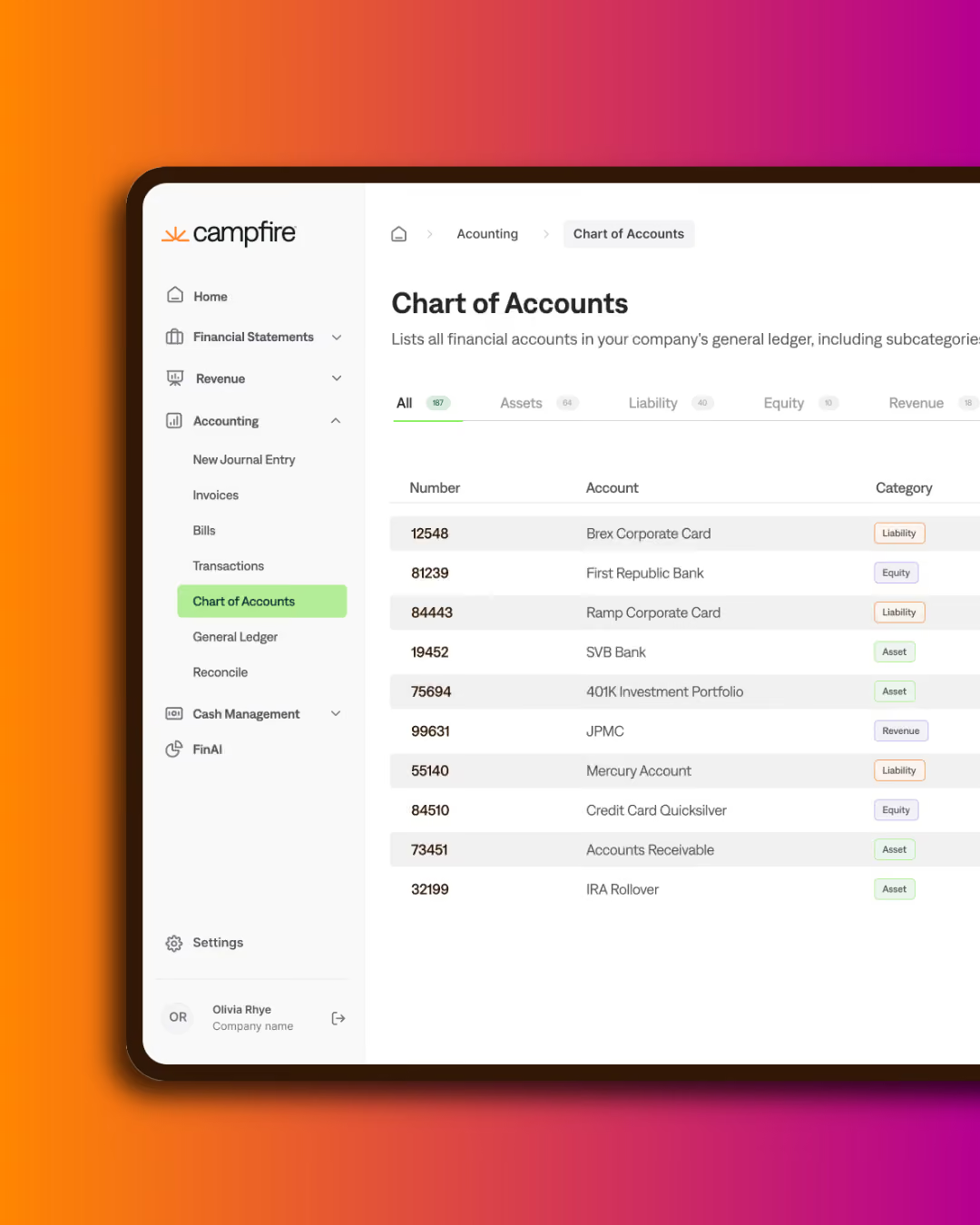
Audit & Controls provides a centralised layer for policy enforcement, approvals, and traceability across all core finance workflows within Campfire. For finance and audit teams operating in fast moving SaaS environments, maintaining visibility over who did what, when, and why is not just a compliance requirement but a foundation for operational trust. Campfire's Audit & Controls module addresses this by embedding controls directly into the workflows your team already uses every day.
Approval routing, segregation of duties, locked periods, and change logging are not bolt on features but core architectural decisions within the platform. This means your finance team does not need to adopt separate governance tools or maintain parallel documentation. Every action taken within Campfire is recorded, traceable, and available for review at any time. For Australian companies working with Cynder, we configure these controls to align with ATO record keeping requirements, ASIC obligations, and the specific audit expectations of your external auditors, ensuring you are always prepared rather than scrambling at year end.

Every change made within Campfire is automatically logged with a timestamp, the user who made the change, and the previous and current values. This applies across all key records including journal entries, invoices, bills, vendor details, customer profiles, and chart of accounts configurations. The result is a complete, immutable history that your finance team and external auditors can rely on without needing to chase down who changed what or when. For growing SaaS companies preparing for SOC 2 compliance or annual audits, this level of traceability is essential. Rather than assembling evidence manually from emails, spreadsheets, and screenshots, your team can point auditors directly to the version history within Campfire.
Every approval, rejection, edit, and posting is captured in context, which dramatically reduces the time and effort required during audit preparation. Cynder helps Australian companies configure Campfire's audit trail to align with local regulatory expectations, including ATO record-keeping requirements and ASIC compliance obligations. We ensure your audit controls are set up correctly from day one so your team can focus on running the business rather than reconstructing a paper trail after the fact.
Operating across jurisdictions introduces a layer of regulatory complexity that many ERP systems handle poorly or not at all. Campfire's local compliance support allows your finance team to apply region specific rules for tax calculation, reporting formats, and document retention without needing to maintain separate systems or workarounds for each country. For Australian companies, this means configuring GST rules, BAS reporting obligations, and ASIC document retention requirements directly within the platform. Tax rates, thresholds, and reporting periods are managed centrally, and updates can be applied without disrupting existing workflows. This is particularly valuable for SaaS companies with customers and operations across Australia, New Zealand, the United States, and the United Kingdom, where tax treatment varies significantly by jurisdiction.
Campfire supports multiple tax configurations per entity, so your Australian entity can handle GST while your US entity handles state level sales tax, all within the same unified ledger. Cynder works with Australian finance teams to configure these compliance settings during implementation, ensuring your Campfire instance is aligned with local requirements from the start. We also provide ongoing support as regulations change, so your team does not need to interpret new ATO guidance or ASIC updates in isolation. The goal is to keep your compliance posture current without adding manual overhead or specialist contractor costs to your finance function.
Compliance policies define the boundaries within which your finance team operates, but enforcing those policies consistently across a growing organisation is a significant challenge. Campfire's policy compliance checks allow you to define rules and thresholds that are automatically enforced across every transaction, journal entry, and approval workflow within the platform. Rather than relying on manual review or periodic spot checks, Campfire continuously monitors activity against your defined policies in real time, flagging violations before they become embedded in your financial records. For Australian companies, this includes enforcing GST thresholds, BAS lodgement deadlines, and ASIC reporting requirements without requiring your team to manually track each obligation. Cynder works with your finance leadership to define these policies during implementation, ensuring they reflect both regulatory requirements and your internal governance standards. The system supports configurable alerts that notify relevant stakeholders when a policy breach is detected, including details about the nature of the violation, the user involved, and recommended remediation steps. This proactive approach to compliance reduces the risk of errors compounding over time and ensures that your finance team maintains control even as transaction volumes increase. For organisations preparing for SOC 2 certification or undergoing external audits, having automated policy enforcement provides tangible evidence that controls are operating effectively throughout the reporting period, not just at the point of audit.
As SaaS companies scale from early stage through to IPO readiness, the demands placed on finance teams increase dramatically. What begins as a handful of monthly transactions quickly becomes thousands of daily entries across multiple entities, currencies, and jurisdictions. Without a structured approach to audit and controls, finance teams find themselves spending more time chasing documentation and reconciling discrepancies than they do on strategic analysis.
Campfire's Audit & Controls module is designed specifically for this growth trajectory, providing the infrastructure your team needs to maintain operational integrity without sacrificing speed. The module integrates directly with your existing Campfire workflows, meaning controls are embedded into the processes your team already uses rather than bolted on as an afterthought.
For Australian companies working with Cynder, this means your audit and control framework is configured from day one to meet ATO, ASIC, and BAS requirements while also supporting international compliance standards as you expand into new markets. The result is a finance function that scales with confidence, where every transaction is tracked, every approval is documented, and every policy is enforced automatically.
Whether you are preparing for your first external audit or managing ongoing SOC 2 compliance, Campfire gives your team the tools to stay ahead of regulatory expectations and focus on what matters most: growing your business.
Speak with Cynder today to see how Campfire's Audit & Controls module can streamline your compliance workflows, reduce audit preparation time, and give your team complete visibility over every transaction. Book a personalised demo and discover how Australian SaaS companies are using Campfire to meet ATO, ASIC, and SOC 2 requirements without the manual overhead.
