
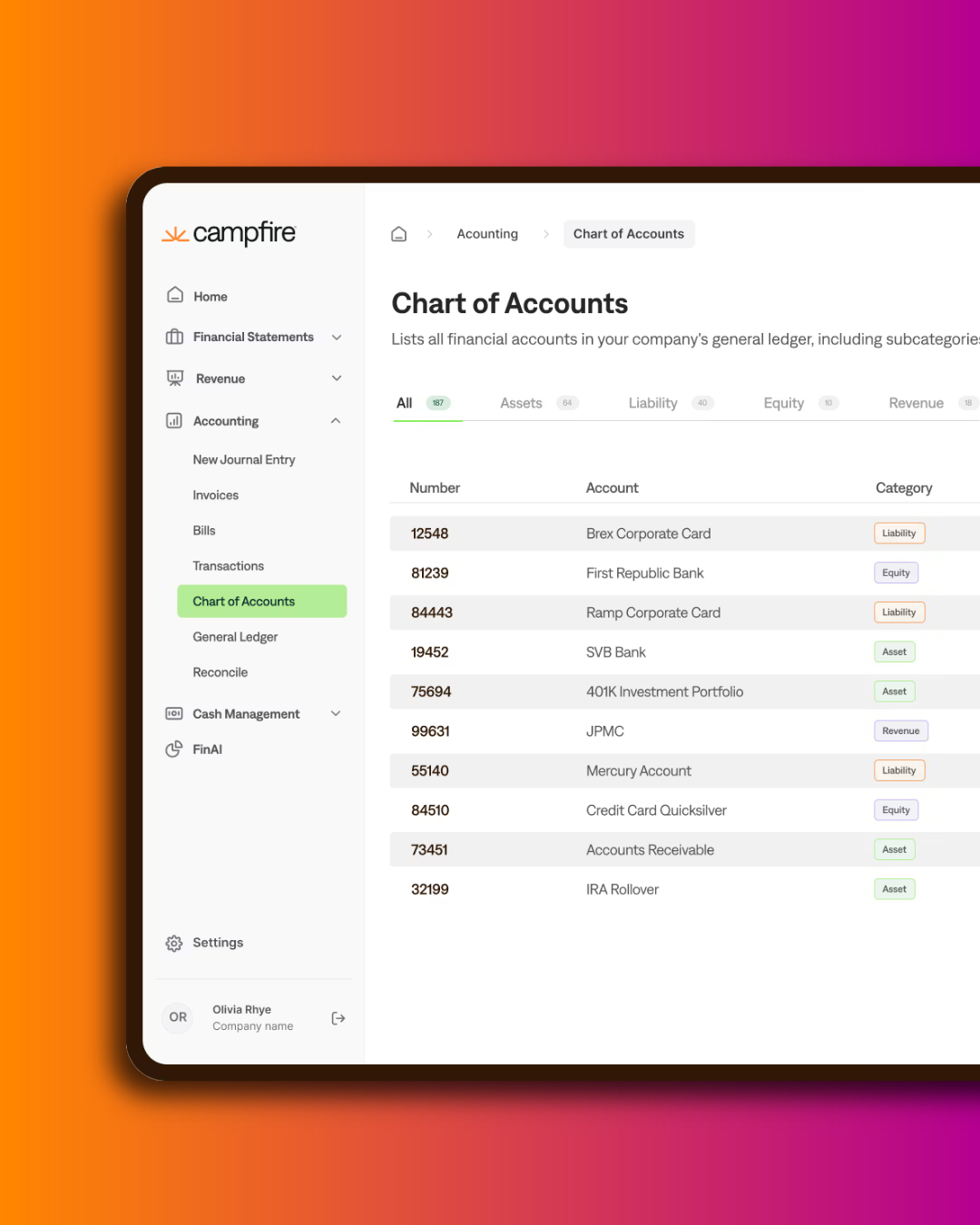
Campfire’s asset register acts as a single, central repository for all fixed asset information across the organisation. Each asset record includes key details such as acquisition cost, in-service date, location, custodian, asset class, depreciation method, useful life, and net book value. This ensures finance teams are always working from accurate, up-to-date information. The register connects directly to depreciation, disposals, transfers, and reporting, keeping all asset-related processes aligned. With built-in search and filtering, teams can quickly find and analyse assets without manual effort.
Campfire stores both financial and operational data for every asset. In addition to standard accounting fields, it supports custom attributes such as serial numbers, warranty details, insurance information, and maintenance schedules. Assets can be structured hierarchically, allowing complex items with multiple components to be tracked clearly. Every change to an asset record is logged, creating a full history across its lifecycle. This level of detail supports accurate reporting, compliance requirements, and broader asset management needs.
Campfire supports organisations with assets spread across multiple entities, business units, and locations. Assets can be filtered and reported by any organisational dimension, making it easier to prepare entity-level reports, location-based summaries, or department-level analysis. Inter-entity transfers are recorded with full audit trails, ensuring movements are reflected correctly in each set of accounts. This provides clear visibility and control over asset distribution, helping teams manage assets consistently across the business.
Why Campfire Stands Out
